Heavy-Duty Cleaning for Hardworking Facilities
Dust, debris, traffic, and daily operations can quickly affect the appearance and safety of a warehouse. Homerun Commercial Cleaning provides dependable warehouse and industrial cleaning customized around your facility, operating schedule, and work environment.
Keep Your Operation Cleaner, Safer, and Ready for Business
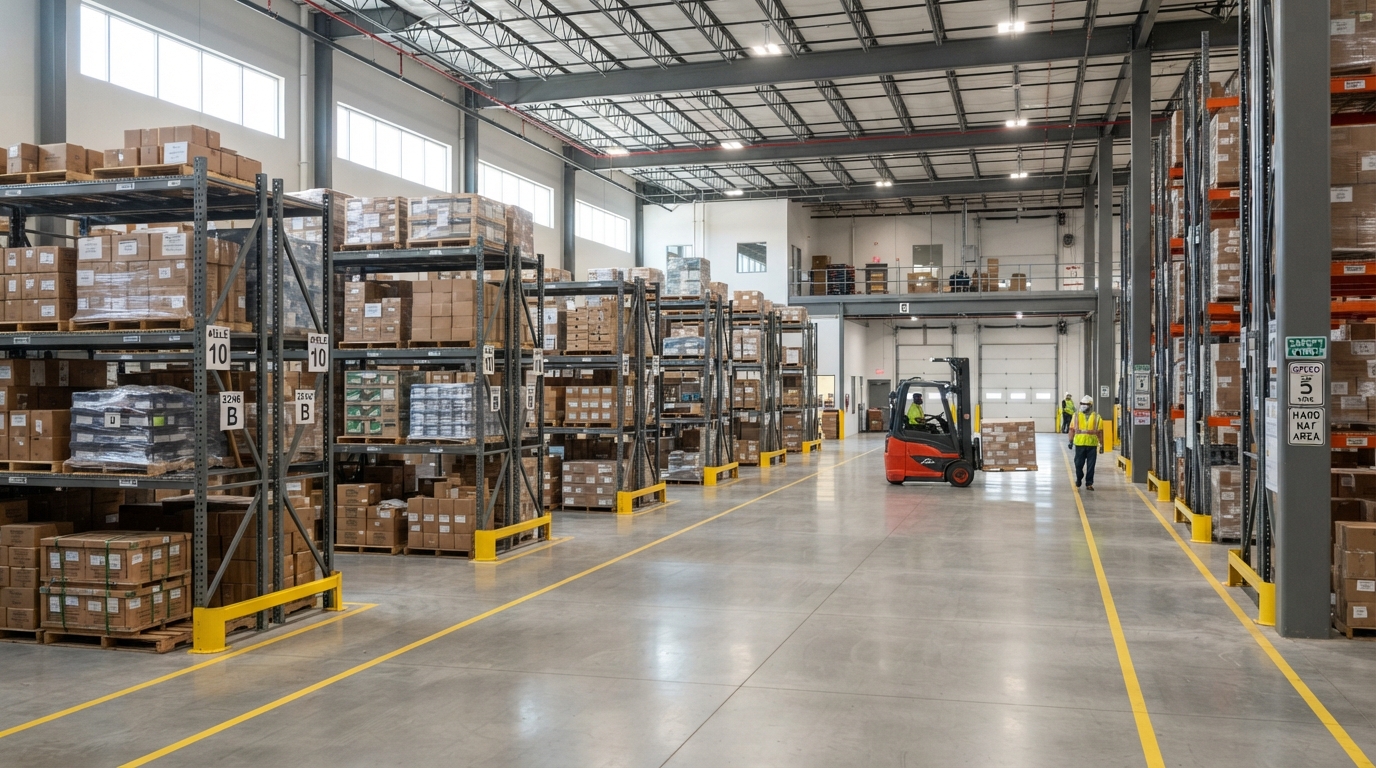
Warehouse cleaning requires more than emptying trash and mopping an office. Large floors, loading areas, storage racks, employee spaces, and active equipment zones require careful planning.
Homerun Commercial Cleaning begins with an on-site walkthrough and creates a written scope identifying the areas to be cleaned, required frequency, equipment, safety procedures, restricted zones, and tasks that require specialized contractors. We serve warehouses, distribution centers, storage facilities, workshops, and light-manufacturing properties throughout Gwinnett County, Metro Atlanta, and surrounding areas.
Your Facility Works Hard. Its Cleaning Program Should Too.
A clean warehouse supports a more professional operation and helps keep floors, walkways, employee spaces, and work areas ready for the next shift. These are the frustrations facility managers share most often before switching to Homerun Commercial Cleaning.
- Dust accumulating on floors, racks, and ledges
- Dirty or stained warehouse floors
- Packaging debris collecting around work areas
- Slippery floors and unattended spills
- Restrooms and breakrooms being neglected
- Cleaning crews disrupting production
- Inconsistent service between visits
- Poor communication about hazards
- Cleaners entering restricted areas
- Cleaning personnel interfering with inventory
- Dust being blown from one area to another
- Improper equipment being used around combustible dust
- Trash containers overflowing
- Loading docks that remain dirty
- Office areas receiving attention while the warehouse is ignored
- Cleaners arriving during peak shipping hours
- Unclear responsibility for spills and industrial waste
- Lack of inspection or documentation
- Contractors unfamiliar with facility safety requirements
A Site-Specific Plan That Fits Your Workflow
Homerun Commercial Cleaning creates a site-specific plan that fits around your workflow, not one that gets in the way of it. Here is what sets us apart.
- Free on-site facility assessments with hazard and responsibility review
- Background-checked cleaning professionals trained on your site safety rules
- A written scope of work with clear boundaries for restricted areas and machinery
- Flexible daytime or evening scheduling coordinated around shifts and shipping windows
- Licensed and insured service with competitive contract pricing
Our Warehouse and Industrial Cleaning Process
A structured six-step approach that begins with a full facility assessment and ends with consistent, inspected results.
On-Site Facility Assessment
A representative evaluates total facility square footage, warehouse and production-floor conditions, number of offices, restrooms, and breakrooms, loading docks and receiving areas, shipping and staging zones, aisles and pedestrian walkways, storage racks and shelving, floor type and condition, dust and debris levels, ceiling and wall cleaning needs, machinery and equipment boundaries, active forklift and vehicle traffic, stored products and materials, chemical or hazardous-material areas, combustible-dust concerns, restricted and permit-required areas, required PPE, customer safety orientation requirements, security and access procedures, preferred service schedule, and waste-disposal responsibilities.
Hazard and Responsibility Review
Before cleaning begins, Homerun and the customer document areas cleaners may enter, areas requiring an escort, active equipment and vehicle routes, machinery cleaners may not touch, required PPE, emergency exits and evacuation procedures, chemical hazards and Safety Data Sheets, ordinary versus regulated waste, spill-response responsibilities, lockout/tagout responsibilities, fall-protection restrictions, combustible-dust risks, and approved cleaning methods and equipment.
Customized Scope of Work
The written cleaning plan identifies tasks included during every visit, periodic and project-based tasks, service frequency, approved products and equipment, waste streams the team may handle, restricted surfaces and materials, shutdown or low-activity cleaning windows, inspection and communication procedures, and pricing and additional-service terms.
Initial or Restorative Cleaning
When needed, an initial service addresses accumulated dust, floor buildup, neglected corners, restrooms, breakrooms, offices, loading areas, and other approved sections. Large-scale restoration, hazardous residue, or specialty dust removal are quoted separately.
Recurring Facility Cleaning
The assigned team follows a site-specific checklist during every visit. Service is coordinated with facility management so cleaners do not interfere with forklifts, machinery, shipping activity, employees, or production.
Quality-Control Inspections
Completed work is reviewed against the approved scope. You have a clear process for reporting missed areas, hazards, spills, schedule changes, and additional cleaning needs.
Typical Warehouse Cleaning Tasks
The exact checklist is customized for each facility based on the walkthrough and approved scope of work.
Warehouse Floors and Aisles
- Sweeping loose dirt and ordinary debris
- Commercial vacuuming
- Damp-mopping smaller hard-floor areas
- Machine scrubbing compatible floors
- Spot-cleaning ordinary spills
- Cleaning floor edges and corners
- Cleaning pedestrian walkways
- Removing ordinary debris from designated areas
- Placing appropriate wet-floor signs
- Reporting damaged floors, leaks, or hazardous conditions
Loading Docks and Receiving Areas
- Sweeping dock floors
- Removing ordinary packaging debris
- Emptying approved trash containers
- Cleaning pedestrian areas
- Dusting approved ledges
- Spot-cleaning doors and dock-area surfaces
- Cleaning approved dock offices
- Reporting leaks, damaged surfaces, or unsafe debris
Storage Racks and Shelving
- Dusting accessible rack exteriors
- Cleaning empty lower shelves
- Vacuuming around rack bases
- Removing cobwebs from accessible areas
- Cleaning approved ledges
- Removing ordinary debris from aisles
Shipping and Staging Areas
- Sweeping floors
- Removing ordinary packaging debris
- Emptying approved trash containers
- Cleaning worktables when cleared
- Cleaning approved touchpoints
- Vacuuming around stationary workstations
- Spot-cleaning walls and doors
- Cleaning pedestrian lanes
Offices and Reception Areas
- Emptying ordinary trash
- Dusting accessible surfaces
- Vacuuming carpets
- Mopping hard floors
- Cleaning reception counters
- Spot-cleaning interior glass
- Cleaning frequently touched surfaces
- Avoiding documents, electronics, and personal items
Employee Breakrooms
- Cleaning tables and counters
- Cleaning sinks and faucets
- Wiping appliance exteriors
- Emptying ordinary trash
- Sweeping and mopping floors
- Cleaning cabinet handles
- Restocking customer-provided supplies
- Cleaning approved touchpoints
Restrooms and Locker Rooms
- Cleaning and disinfecting toilets and urinals
- Cleaning sinks, faucets, mirrors, and counters
- Cleaning partitions and dispensers
- Emptying ordinary waste
- Sweeping and mopping floors
- Cleaning benches and lockers when included
- Restocking customer-provided supplies
- Addressing visible soil and odors
Interior Glass and Doors
- Spot-cleaning entrance doors
- Cleaning approved interior windows
- Removing fingerprints from glass partitions
- Cleaning door handles and push plates
- Cleaning office-side glass
Light-Industrial Cleaning Capabilities
Industrial cleaning may include the following when the site has been assessed and the work can be performed safely. Routine janitorial service does not include cleaning inside machinery, servicing equipment, entering confined spaces, or handling industrial process residue.
- Cleaning production-area floors
- Removing ordinary nonhazardous dust and debris
- Cleaning around stationary equipment
- Dusting accessible structural surfaces
- Cleaning workstations after employees clear them
- Cleaning employee welfare areas
- Cleaning offices located inside the facility
- Cleaning designated storage and staging areas
- Routine floor scrubbing
- Scheduled detail cleaning during low-production periods
- Post-maintenance cleanup of ordinary debris
- Cleaning approved equipment exteriors
Floor-Care Options
Depending on the floor material and facility needs, services may include the following. Before using a floor machine or chemical treatment, Homerun determines floor material, existing finish, manufacturer restrictions, slip-resistance requirements, drainage, nearby inventory, production activity, chemical compatibility, and required drying time.
- Routine sweeping
- Commercial vacuuming
- Damp mopping
- Autoscrubbing
- Degreasing of approved nonhazardous areas
- Concrete-floor cleaning
- Carpet cleaning in office areas
- Floor stripping and waxing in compatible spaces
- Spot treatment
- Periodic restorative floor care
Dust-Control Considerations
Warehouses commonly experience dust on floors, rack bases, pallets, ledges, beams, dock doors, pipes, fans, equipment exteriors, and overhead structures. Ordinary dust removal may be included after an assessment.
Combustible Dust Requires Specialized Handling
Some facilities produce combustible dust from wood, metal, plastics, textiles, paper, food ingredients, or other materials. Combustible dust must not be treated like ordinary housekeeping dust. Cleaning methods can create an ignition or explosion hazard if inappropriate vacuums, compressed air, or electrical equipment are used.
Homerun does not advertise combustible-dust remediation unless it has appropriate training, a facility dust-hazard assessment, approved cleaning procedures, properly rated vacuum equipment, required PPE, site-specific authorization, and appropriate insurance coverage.
Equipment and Products
Depending on the approved scope, the team may use the following equipment. Only equipment Homerun owns or can reliably provide is listed.
- Commercial push brooms
- Dust mops
- Industrial or commercial vacuums
- Wet/dry vacuums when appropriate
- HEPA-filtered vacuums when required
- Microfiber cloths and flat-mop systems
- Commercial mops and buckets
- Walk-behind floor scrubbers
- Floor buffers or burnishers
- Degreasers approved for the surface and soil
- Glass-cleaning tools
- Wet-floor signs and safety cones
- High-visibility clothing
- Gloves, eye protection, and other task-appropriate PPE
Safety and Site Controls
A professional warehouse cleaning plan may incorporate the following safety measures. Homerun follows applicable site safety requirements after confirming its program and employee training.
- Pre-service safety orientation
- Documented restricted areas
- Designated pedestrian routes
- Coordination with forklift traffic
- High-visibility clothing
- Task-appropriate PPE
- Properly labeled cleaning products
- Safety Data Sheet availability
- Wet-floor signs and barricades
- Chemical dilution procedures
- Equipment inspection
- Incident-reporting procedures
- Emergency contact information
- Facility lockout/tagout coordination
- Rules for elevated work
- Waste-stream identification
Important Service Boundaries
Machinery and Lockout/Tagout
Cleaning inside, underneath, or near machinery may expose workers to unexpected startup, electrical power, pressure, heat, gravity, or other stored energy. Homerun employees do not remove guards, open machinery, clear jams, clean internal components, or enter danger zones unless an authorized lockout/tagout procedure has been completed and the employees are appropriately trained.
Forklifts and Powered Equipment
Cleaning personnel do not operate forklifts, scissor lifts, boom lifts, pallet jacks, compactors, conveyors, or customer machinery without documented authorization and required training. Active forklift areas are cleaned during shutdowns or coordinated low-traffic periods whenever possible.
Hazardous Chemicals and Spills
Routine warehouse cleaning does not include unidentified chemicals, industrial process waste, oils, solvents, acids, pesticides, hazardous powders, leaking batteries, or other potentially regulated materials. If cleaners discover an unknown spill, they stop work, keep others away when safe, notify the facility representative, avoid touching the material, and follow the site emergency-response procedure.
Confined Spaces and Elevated Areas
Routine cleaning excludes tanks, silos, pits, vessels, crawlspaces, utility vaults, roofs, unprotected mezzanines, high racks, elevated beams, and areas requiring fall protection. These tasks require separate assessment, specialized equipment, training, and authorization.
Specialized Exclusions
Unless specifically confirmed and separately quoted, the service does not include hazardous-material remediation, combustible-dust remediation, mold or asbestos remediation, biohazard cleanup, sewage cleanup, chemical-spill response, oil-spill remediation, tank or silo cleaning, confined-space entry, internal machinery cleaning, conveyor cleaning, industrial exhaust-system cleaning, hazardous-waste transportation, pest control, or exterior high-access cleaning.
Scheduling Built Around Your Operation
Homerun Commercial Cleaning offers flexible daytime and evening service. Scheduling options are customized to your shifts, shipping windows, production periods, and facility-access requirements, subject to availability and the property assessment.
How Much Does Warehouse or Industrial Cleaning Cost?
Pricing depends on total square footage, floor type and condition, dust and debris levels, number of restrooms and employee areas, ceiling and rack height, equipment required, cleaning frequency, operating schedule, loading and forklift activity, restricted areas, required PPE and orientation, waste-handling responsibilities, and specialized cleaning tasks. Homerun Commercial Cleaning provides a free on-site estimate and customized contract pricing after evaluating the facility.
Warehouse and Industrial Cleaning FAQs
Answers to the questions Metro Atlanta facility managers ask most often.
What types of facilities do you clean?
Do you clean active warehouses?
Can you clean large warehouse floors?
Do you provide floor scrubbing?
Do you remove oil and grease?
Do you clean warehouse racks?
Can you clean around machinery?
Do you provide high-dusting services?
Can you remove combustible dust?
Do you handle chemical spills or hazardous waste?
Can you clean loading docks?
Do you clean warehouse offices and breakrooms?
Can you work around our operating schedule?
Do you bring cleaning equipment and products?
Do you remove pallets, scrap, or production waste?
Are your cleaning professionals background-checked?
Are you licensed and insured?
How often should a warehouse be cleaned?
What happens if a cleaning concern occurs?
Serving Gwinnett County and Metro Atlanta
Homerun Commercial Cleaning is locally owned and based in Metro Atlanta. If your facility is in the metro area, we can be there.
Build a Cleaning Program That Works as Hard as Your Facility
Request a free on-site estimate from Homerun Commercial Cleaning and receive a customized plan built around your space, schedule, and operation.
Request a Free Facility Assessment
Tell us about your facility and we will get back to you within one business day.
Related Services
Floor Stripping & Waxing
Professional VCT floor care, stripping, waxing, and burnishing for high-traffic warehouse and office floors.
Learn MorePost Construction Cleaning
Rough and final cleans to prepare your newly built or renovated facility for occupancy.
Learn MorePressure Washing
Exterior cleaning for building facades, loading dock areas, parking lots, and sidewalks.
Learn More