A Cleaner Exterior Starts at the Curb
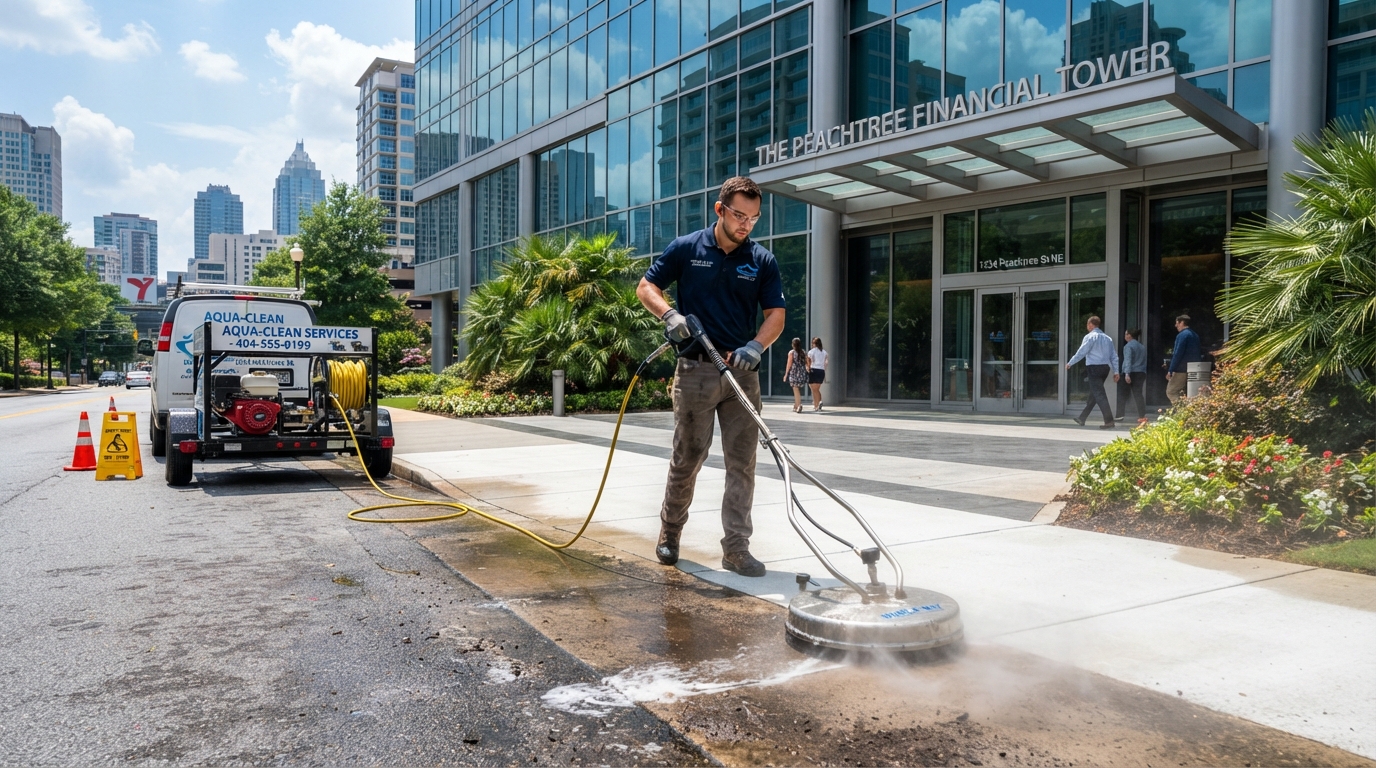
Dirt, traffic film, algae, gum, and exterior buildup can make a commercial property look neglected before customers ever walk through the door. Homerun Commercial Cleaning provides professional pressure washing designed to improve curb appeal while protecting the surfaces being cleaned.
Make a Stronger First Impression
Your building exterior, sidewalks, entryways, and loading areas are some of the first things customers, employees, and tenants notice.
Homerun Commercial Cleaning evaluates the surface and selects an appropriate combination of water pressure, cleaning solution, dwell time, agitation, and rinsing. The goal is effective cleaning without unnecessary damage to paint, mortar, windows, landscaping, or surrounding property.
Every project begins with an assessment of the surface, surrounding property, drainage, stains, access requirements, and business operations. The cleaning method is then selected based on the material and condition, not simply the highest available pressure.
Pressure Washing, Power Washing, and Soft Washing
These terms are often used interchangeably, but they describe different methods. Understanding the difference helps protect your surfaces.
Pressure Washing
Pressure washing uses pressurized water to remove dirt and buildup from durable surfaces. It may be appropriate for certain concrete, masonry, and other hard exterior surfaces.
Power Washing
Power washing generally refers to pressure washing that uses heated water. Heated equipment can help with certain grease and oil conditions, but it should only be advertised if Homerun owns or can reliably provide hot-water equipment.
Soft Washing
Soft washing uses lower pressure and relies more heavily on an appropriate cleaning solution, dwell time, and controlled rinsing. It may be better for painted surfaces, siding, stucco, EIFS, and other materials that could be damaged by high pressure.
Our Pressure Washing Process
A methodical, seven-step approach that matches the cleaning method to the surface and the stain.
On-Site Exterior Assessment
A representative evaluates surface material, approximate square footage, age and condition of the surface, paint or sealant, cracks and damaged areas, stains, nearby windows and vents, electrical equipment, landscaping, drainage, water access, equipment-access requirements, elevated areas, operating hours, required barriers, neighboring properties, local water-use restrictions, and customer expectations.
Surface and Stain Identification
Before selecting a method, the team determines what the surface is made from, whether it has a factory coating or has been painted or sealed, whether high pressure could cause damage, what is creating the stain, whether the stain has penetrated the material, and whether a test spot is required. A test area may be recommended for sensitive surfaces.
Site Preparation
Before washing begins, the team confirms the work area, notifies the customer of required closures, moves approved lightweight objects, asks the customer to remove valuables, closes windows and doors, protects electrical components, protects landscaping, pre-wets compatible plants, blocks or protects storm drains when required, places safety cones and barriers, redirects pedestrians and vehicles, and documents existing damage.
Selecting the Cleaning Method
The technician selects an appropriate water pressure, nozzle, spray pattern, working distance, water temperature if applicable, cleaning solution, product concentration, dwell time, agitation method, and rinsing method. Pressure should be matched to the surface. More pressure does not necessarily produce a better result.
Applying Cleaning Solution When Needed
Some buildup responds better to an appropriate detergent or treatment than to water pressure alone. The product must be compatible with the surface, surrounding landscaping, paint and coatings, metals, glass, and local wastewater requirements. Products should be used according to their labels and should not be allowed to dry on sensitive surfaces.
Controlled Washing and Rinsing
The work proceeds in manageable sections while the team monitors surface reaction, water intrusion, overspray, pedestrian traffic, drainage, landscaping, streaking, runoff, and previously hidden damage.
Final Inspection
After washing, the team rinses approved surrounding areas, checks the surface for missed sections, inspects windows and adjacent finishes, removes temporary barriers when safe, confirms that drains are clear, documents stains that could not be removed, reports newly visible surface damage, and completes a customer walkthrough when appropriate.
Commercial Surfaces That May Be Cleaned
Subject to inspection and compatibility, pressure washing may be appropriate for the following surfaces. Every surface should be assessed before service.
Building Exterior Cleaning
Depending on the material and condition, exterior cleaning may address dirt, traffic film, pollen, cobwebs, bird-dropping residue, algae or organic growth, surface grime, and general weathering buildup.
High pressure can force water behind siding or through gaps. Sensitive building exteriors may require lower pressure or a different cleaning method. Building washing requires care around:
Loading Dock and Warehouse Exterior Cleaning
When safe and included, service may cover loading-dock aprons, exterior warehouse walls, receiving entrances, pedestrian areas, concrete service lanes, dock-area buildup, ordinary dirt and grime, and approved nonhazardous stains.
Pressure washing must be coordinated around trucks, forklifts, dock plates, compactors, trailers, shipping activity, chemicals and stored materials, storm drains, and employee walkways. Industrial wastewater, chemical residue, process waste, fuel, and unidentified spills require separate evaluation.
Dumpster-Pad Cleaning
Dumpster areas may contain grease, food residue, bodily fluids, broken glass, pests, chemicals, leaking waste, and contaminated runoff. Before accepting this service, Homerun confirms whether the dumpster will be moved, who is responsible for loose garbage, whether grease or food residue is present, wastewater collection requirements, drain locations, required disinfectants or degreasers, PPE, pest or sharps concerns, and whether hazardous or medical waste may be present.
Common Stains and Realistic Expectations
Different stains respond differently to pressure washing. Here is what to expect for each type.
Dirt and surface grime
Ordinary exterior dirt and traffic film can often be significantly reduced.
Algae and organic growth
Visible organic buildup may respond to an appropriate treatment and cleaning process. Regrowth depends on moisture, shade, drainage, and surrounding conditions.
Gum
Gum may require pretreatment, heat, scraping, or repeated cleaning. Cold-water pressure alone may leave residue or shadowing.
Oil and grease
Fresh surface oil may improve with an appropriate degreaser, agitation, and washing. Old oil can penetrate porous concrete and leave a permanent shadow.
Rust
Rust usually requires a specialized treatment rather than pressure alone. Results depend on the source, surface, and depth of staining.
Paint and graffiti
Paint removal is not ordinary pressure washing. Aggressive cleaning may also remove the original coating or damage the underlying material. Graffiti removal should be separately assessed.
Efflorescence and mineral deposits
White masonry deposits and hard-water staining may require specialized chemistry. Pressure alone may not remove them and can damage weak mortar.
Tire marks
Some surface tire marks may improve, but deep or heat-set rubber marks may remain.
Paint oxidation
Oxidized paint may release pigment during washing and create uneven coloration. A test area is important before cleaning painted siding or metal panels.
Your Property Starts Making an Impression From the Parking Lot
Dirty sidewalks, stained entrances, exterior buildup, and neglected service areas can affect how customers view the entire business. Homerun Commercial Cleaning provides surface-appropriate exterior cleaning designed to improve curb appeal without using unnecessary pressure.
Benefits of Commercial Pressure Washing
When performed correctly on compatible surfaces, pressure washing can deliver the following results.
Wastewater and Runoff Control
Pressure-washing water may collect dirt, detergent, oil, grease, paint particles, metals, food residue, or other pollutants. This wastewater should not automatically be allowed to enter a storm drain.
Before work begins, the project should identify storm-drain locations, sanitary-sewer access, property drainage, pollutants likely to be present, required drain protection, wastewater collection needs, local disposal requirements, and customer permit responsibilities.
Control options may include drain covers, berms, containment mats, wet vacuums, water-recovery equipment, filtration, controlled collection, disposal through an approved sanitary connection, and off-site disposal when required.
EPA's stormwater program is intended to prevent pollutants from being carried through storm systems into surface waters. Certain industrial and construction discharges may require permit coverage. Wastewater-recovery or environmental-compliance services should not be advertised until Homerun confirms its equipment and procedures.
Important Service Boundaries
Understanding what pressure washing can and cannot do helps set realistic expectations and protects your property.
Roof Cleaning
High-pressure washing can damage shingles, roof coatings, flashing, seams, gutters, and warranties. Roof cleaning also creates fall hazards and chemical-runoff concerns. Roof washing should only be offered after confirming soft-wash equipment, fall-protection procedures, insurance, products, and roof-manufacturer procedures.
Elevated Building Cleaning
Upper-story washing may require ladders, scaffolding, lifts, fall protection, trained operators, traffic control, and additional insurance. Multi-story service should not be promised until these capabilities are confirmed.
Delicate or Damaged Surfaces
High-pressure washing may be inappropriate for loose or peeling paint, damaged stucco or EIFS, old or crumbling mortar, soft brick, asphalt shingles, weathered wood, composite materials, window screens, unsealed joints, damaged siding, electrical components, security equipment, painted signage, lead-painted surfaces, and asbestos-containing materials.
Water Intrusion
The customer should identify known leaks, failed seals, damaged windows, open joints, loose siding, and building-envelope problems before cleaning. Pressure washing is not a waterproofing service.
Hazardous Materials
Routine pressure washing should exclude unidentified chemicals, hazardous waste, fuel spills, regulated industrial residue, lead-paint removal, asbestos-containing materials, biohazards, sewage, medical waste, and contaminated soil. These conditions may require testing, containment, permits, and specialized remediation.
Scheduling Options
Depending on availability and site conditions, service may be scheduled in the following ways. Weather, freezing temperatures, lightning, high winds, drought restrictions, and drainage conditions may require rescheduling.
How Much Does Commercial Pressure Washing Cost?
Pricing depends on total square footage, surface material, surface condition, type and severity of staining, building height, water access, equipment required, cleaning solutions, hot-water requirements, wastewater containment, drain protection, pedestrian and traffic control, furniture or equipment movement, number of service areas, business operating hours, and project frequency.
Homerun Commercial Cleaning provides a free on-site estimate after assessing the property. A fixed square-foot price is not published without establishing minimum charges, water-access requirements, stain-treatment limits, and wastewater costs.
Request a Free Exterior AssessmentPressure Washing FAQs
What commercial surfaces can you pressure wash?
What is the difference between pressure washing and soft washing?
Do you provide soft washing?
Do you provide hot-water power washing?
Can pressure washing remove oil stains?
Can you remove gum?
Will pressure washing remove rust?
Can you remove mold and mildew?
Do you clean building exteriors?
Do you clean roofs?
Do you clean dumpster pads?
Do you pressure wash parking lots?
Will pressure washing damage concrete?
Can you remove paint or graffiti?
Do you supply the water?
Do I need to close my business?
How often should a commercial property be pressure washed?
How long does the service take?
Are you licensed and insured?
Do you provide free estimates?
What happens if a stain cannot be completely removed?
What happens if we are unhappy with the service?
Serving Gwinnett County and Metro Atlanta
Homerun Commercial Cleaning provides pressure washing for commercial properties throughout Gwinnett County, Metro Atlanta, and surrounding areas. If your facility is in the metro area, we can be there.
Give Your Property a Cleaner Exterior
Give your commercial property a cleaner, more professional appearance from the outside in. Request a free on-site pressure washing estimate from Homerun Commercial Cleaning today.
Request a Free Exterior Assessment
Tell us about your property and we will get back to you within one business day.
Related Services
Post-Construction Cleaning
Rough, final, and touch-up cleaning for newly built or renovated commercial properties.
Learn MoreWarehouse Cleaning
Interior cleaning for warehouses, distribution centers, and industrial facilities.
Learn MoreFloor Stripping & Waxing
Restorative floor refinishing for VCT and compatible commercial flooring.
Learn More