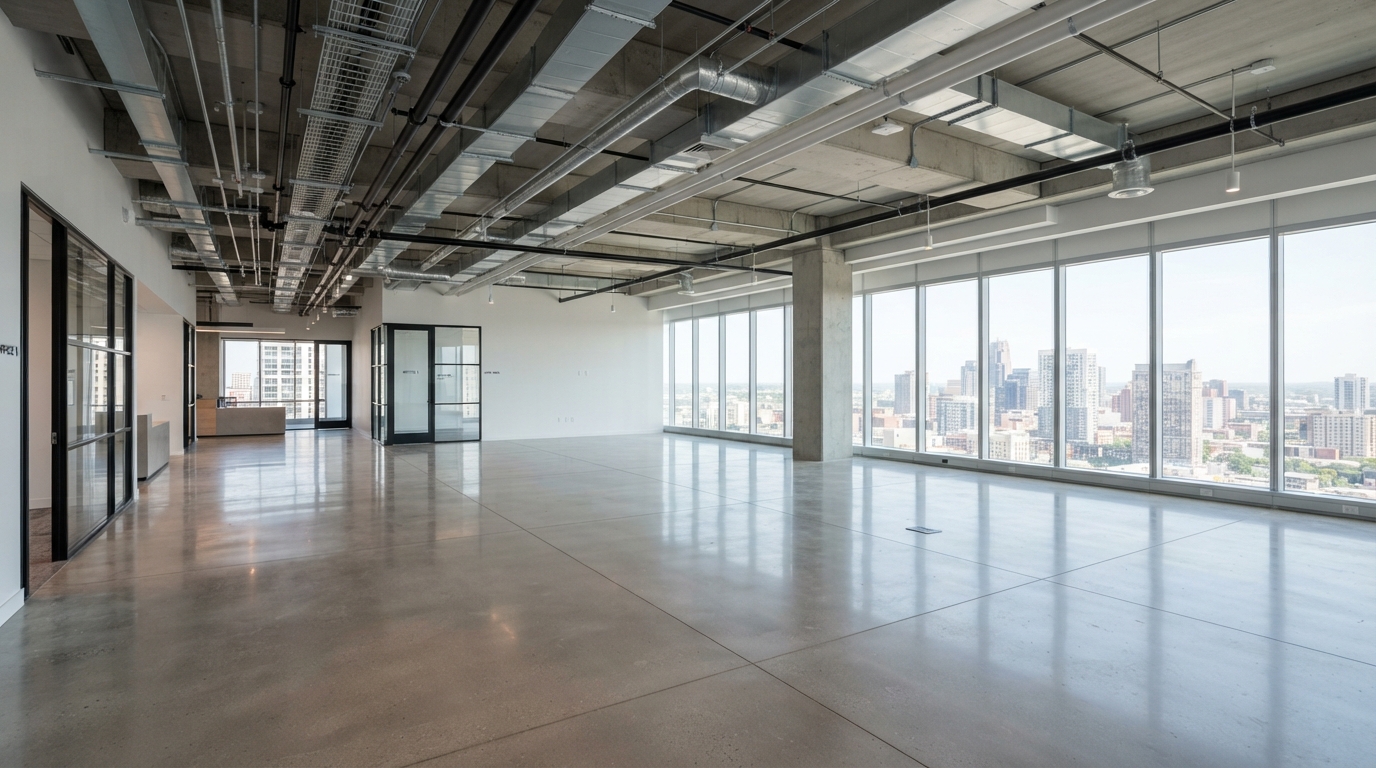
From Construction Site to Move-In Ready
The construction may be finished, but the property is not ready until the dust, debris, labels, smudges, and installation residue are gone. Homerun Commercial Cleaning provides detailed post-construction cleanup designed to reveal the finished work and prepare your space for its next chapter.
Let the Finished Work Make the First Impression
Construction and renovation can leave fine dust on nearly every surface, from floors and cabinets to fixtures, ledges, trim, and interior glass. Homerun Commercial Cleaning creates a project-specific cleaning plan based on the construction phase, property size, surface materials, completion schedule, access conditions, and required level of detail.
We serve general contractors, property managers, developers, and business owners throughout Gwinnett County, Metro Atlanta, and surrounding areas who need a dependable cleaning partner for the final stage of their project.
Three Phases of Post-Construction Cleaning
Not every project needs all three phases. Homerun quotes each phase separately based on the site's condition and the general contractor's requirements.
Rough Cleaning
Takes place after major construction work is complete but before every finish and fixture has been installed.
- Collecting approved loose construction debris
- Removing ordinary packaging materials
- Clearing accessible floors and walkways
- Vacuuming or collecting heavy dust
- Cleaning approved wall and floor surfaces
- Removing labels from authorized surfaces
- Cleaning window and door tracks
- Cleaning inside empty cabinets and closets
- Preparing areas for flooring, cabinetry, painting, or final installation
- Reporting protruding nails, sharp objects, leaks, or unsafe conditions
Final Detail Cleaning
Begins after major construction and most punch-list work have been completed. This is the most detailed cleaning phase.
- Top-to-bottom dust removal
- Cleaning walls, ledges, trim, and baseboards
- Cleaning doors, frames, and hardware
- Cleaning cabinets, drawers, shelves, and closets
- Cleaning counters and backsplashes
- Cleaning interior glass, mirrors, and frames
- Removing approved labels and protective film
- Cleaning fixtures and appliance exteriors
- Cleaning restrooms and kitchens
- Vacuuming carpets and cleaning hard floors per manufacturer instructions
- Cleaning vents and grilles externally
- Cleaning switches, outlets, and cover plates
- Cleaning stair rails and handrails
- Removing smudges, fingerprints, and footprints
- Preparing the property for the final walkthrough
Touch-Up Cleaning
Fine construction dust can continue settling after the initial final clean. Contractors and punch-list crews may also reenter and create new dust or marks.
- Removing newly settled dust
- Spot-cleaning doors and walls
- Cleaning fingerprints and smudges
- Recleaning glass and mirrors
- Final vacuuming and mopping
- Cleaning countertops and fixtures
- Correcting missed details
- Addressing areas affected by punch-list work
- Preparing the space for occupancy, photography, staging, or handover
Construction Complete Doesn't Always Mean Move-In Ready
Fine dust, labels, packaging, smudges, and installation residue can hide the quality of a newly completed project. Homerun Commercial Cleaning provides detailed, room-by-room post-construction cleaning that helps the finished work stand out.
We coordinate with your project schedule, document the scope in writing, and work systematically so no room, closet, or corner is missed before your final walkthrough or turnover deadline.
Common Frustrations We Address
- Fine dust returning after the first cleaning
- Dust remaining inside cabinets and closets
- Dirty vents, trim, and ledges
- Stickers and protective film left behind
- Paint or adhesive residue
- Smudged glass and mirrors
- Footprints on new floors
- Dusty baseboards and door frames
- Contractors returning after the final clean
- Unclear responsibility for debris removal
- Cleaners damaging new finishes
- Crews using incorrect chemicals
- Poor coordination with the project schedule
- Final cleaning being scheduled too early
- Missed rooms and storage areas
- Dirty bathrooms and breakrooms
- Incomplete cleaning before the final walkthrough
- Unexpected change-order charges
- Contractors confusing repair work with cleaning work
Our Post-Construction Cleaning Process
A structured, documented approach that keeps your project on schedule.
On-Site Project Assessment
A representative visits the property to evaluate total square footage, construction or renovation phase, property type, number of floors and rooms, ceiling and window heights, surface and flooring materials, dust and debris levels, interior and exterior glass requirements, cabinetry and millwork, appliances and fixtures, adhesive or residue concerns, construction materials still on site, water and electricity availability, dumpster availability, elevator and stair access, parking and loading access, required PPE, active trades and equipment, project deadlines, inspection and turnover dates, areas requiring elevated access, hazardous-material concerns, scope of debris removal, and expected finish standard. Photos and a written scope document the site's condition before service begins.
Scope and Responsibility Confirmation
The proposal identifies the cleaning phase or phases included, areas included and excluded, ordinary debris responsibilities, dumpster or hauling arrangements, interior and exterior window cleaning, sticker and protective-film removal, paint and adhesive residue limits, high-cleaning limits, appliance and fixture cleaning, floor-care procedures, number of cleaning passes, touch-up service terms, change-order procedures, active-trade coordination, and the customer walkthrough and approval process.
Site Preparation and Safety Review
Before cleaning starts, the team confirms the project superintendent or contact, completes any required site orientation, identifies active construction zones, reviews emergency exits, verifies required PPE, establishes restricted areas, confirms safe electrical and water access, coordinates lifts and ladders, inspects for sharp debris, identifies unknown dust or residue, confirms that hazardous work is complete, protects newly installed finishes, and restricts access to active cleaning areas.
Top-to-Bottom Dust Removal
Detailed cleaning generally begins with higher approved surfaces before progressing downward. Dust is then collected from lower surfaces and floors during the final steps. The typical order covers approved overhead and elevated surfaces, vents and fixtures, walls and windows, counters and trim, furniture and appliance exteriors, and finally floors and floor edges.
Detailed Room-by-Room Cleaning
The cleaning team follows the approved checklist systematically so no rooms, closets, corners, or surfaces are missed. Each area receives the specific tasks documented in the written scope.
Floor Cleaning
Floor-cleaning methods match the manufacturer's instructions. New flooring can be damaged by excessive water, harsh chemicals, abrasive pads, scrapers, or premature cleaning, so the correct approach is confirmed before any product or equipment is used.
Quality-Control Inspection
A supervisor or designated team member inspects the completed area against the written scope before the customer walkthrough. Any scope-related issues are corrected before the property is presented.
Customer Walkthrough
The customer and Homerun review the completed work together, identify scope-related corrections, document trade damage, and distinguish cleaning issues from incomplete construction or repair work. This final step confirms the agreed scope has been met.
Typical Room-by-Room Tasks
The final checklist is customized for each project. These are the areas most commercial properties require.
Entrances and Lobbies
- Removing construction dust
- Cleaning doors and frames
- Cleaning approved interior glass
- Removing authorized stickers and film
- Cleaning handles and hardware
- Wiping reception counters
- Cleaning ledges and baseboards
- Vacuuming mats and carpets
- Cleaning hard floors
- Removing fingerprints and smudges
Offices and Commercial Rooms
- Dusting walls and approved horizontal surfaces
- Cleaning doors, frames, and hardware
- Cleaning window sills and tracks
- Cleaning interior glass
- Cleaning closets, shelves, and cabinets
- Cleaning switches and outlet covers
- Cleaning baseboards and trim
- Vacuuming carpet
- Cleaning hard floors
- Removing ordinary construction dust
Kitchens and Breakrooms
- Cleaning cabinets and drawers inside and outside
- Cleaning countertops and backsplashes
- Cleaning sinks and faucets
- Cleaning appliance exteriors
- Removing approved labels and protective film
- Cleaning shelving
- Cleaning walls and baseboards
- Vacuuming or cleaning floors
- Removing dust from accessible fixtures
Restrooms
- Cleaning toilets and urinals
- Cleaning sinks, faucets, and counters
- Cleaning mirrors
- Cleaning partitions and dispensers
- Removing approved labels
- Cleaning walls, doors, and baseboards
- Cleaning tile and floors
- Removing ordinary installation dust
- Polishing compatible fixtures
- Cleaning cabinets and shelves
Hallways and Stairways
- Cleaning handrails
- Cleaning doors and frames
- Dusting ledges and trim
- Cleaning baseboards
- Vacuuming carpet
- Cleaning stairs and landings
- Mopping compatible hard floors
- Removing ordinary dust and debris
Storage and Utility Areas
- Removing approved loose debris
- Cleaning empty shelving
- Vacuuming or sweeping floors using appropriate methods
- Cleaning doors and frames
- Cleaning accessible ledges
- Wiping approved equipment exteriors
Construction Dust Control
Construction dust may include ordinary drywall dust as well as potentially hazardous material from concrete, mortar, stone, brick, tile, wood, lead-containing coatings, or other sources. The cleaning method is selected after the dust source is identified.
Appropriate Methods
- HEPA-filtered vacuuming when appropriate
- Wet-cleaning methods
- Damp wiping
- Controlled dust collection
- Repeated top-to-bottom cleaning
- Replacing or cleaning cloths frequently
- Preventing cleaned and dirty tools from mixing
Methods to Avoid
Compressed air and ordinary dry sweeping can spread fine dust back into the air and throughout the property. OSHA restricts dry sweeping and dry brushing where those methods could contribute to exposure to respirable crystalline silica, unless safer methods such as wet sweeping or HEPA-filtered vacuuming are not feasible.
Homerun does not advertise silica-dust, lead-dust, asbestos-dust, or hazardous-dust cleanup unless the required assessment, training, exposure-control procedures, PPE, and equipment are confirmed.
Adhesive, Paint, and Residue Removal
Post-construction cleaning may involve window labels, manufacturer stickers, protective film, tape residue, light adhesive, minor paint specks, pencil marks, dusty grout haze, and light caulk residue.
These materials are removed only when the surface has been identified, manufacturer instructions permit removal, an appropriate product or tool is available, a test area has been approved, removal will not void a warranty, and the material is within the agreed scope.
Cleaners do not use metal blades, harsh solvents, or abrasive pads on glass, coated fixtures, stainless steel, stone, flooring, or other sensitive surfaces without authorization. Heavy overspray, cured epoxy, cement, mortar, grout, industrial adhesive, or widespread paint residue may require remediation by the responsible trade.
Window and Glass Cleaning
The proposal clearly distinguishes among interior glass cleaning, exterior ground-level glass, exterior elevated windows, window-frame cleaning, track cleaning, sticker and protective-film removal, paint or adhesive removal, and hard-water stain removal.
New Construction Glass
New construction glass can contain coatings, films, fabrication debris, or manufacturer restrictions. Improper scraping can permanently scratch it. Homerun does not promise razor scraping, elevated exterior cleaning, lift work, or restoration of scratched glass unless those services are confirmed.
Equipment and Products
Depending on the project and approved scope, the team may use the following. Only equipment Homerun owns or can reliably provide is listed.
HEPA equipment, lifts, scaffolding, dumpsters, pressure washers, floor scrubbers, and carpet extractors are only listed when confirmed as available.
Important Service Boundaries
Clear boundaries protect your project, your finishes, and our team.
Construction Completion Requirements
The best final-clean results occur when cutting and sanding are complete, drywall work is complete, painting is substantially complete, fixtures and cabinetry are installed, major punch-list work is finished, contractors have removed their tools and materials, HVAC systems are operational or properly protected, utilities are available, and the building is weather-tight. If trades continue working after the cleaning, additional cleaning should be treated as a touch-up service or change order.
Debris Hauling
The proposal must state whether Homerun will gather ordinary debris, bag debris, move debris to an on-site dumpster, provide a dumpster, transport debris off-site, or pay disposal charges. Full debris hauling should not be advertised unless the company confirms appropriate vehicles, labor, disposal arrangements, insurance, and pricing.
Hazardous Materials
Routine post-construction cleaning excludes asbestos or suspected asbestos, lead-containing dust, respirable silica requiring controlled remediation, mold, sewage, biohazards, chemical spills, contaminated soil, fuel or oil spills, mercury-containing materials, unknown powders or residues, and hazardous or regulated waste. Suspected hazardous material is reported to the general contractor or property owner and assessed by a qualified professional.
Active Construction Work
Cleaning personnel should not remove construction guards or barricades, operate contractor machinery, move scaffolding, perform electrical work, repair plumbing, disconnect equipment, enter confined spaces, work beneath active overhead construction, enter fall-hazard areas, clean live electrical components, or perform contractor punch-list repairs.
Damage and Incomplete Work
Post-construction cleaning does not correct scratched glass, damaged flooring, paint defects, cracked tile, missing grout, failed caulk, dented appliances, cabinet defects, drywall damage, incomplete installations, plumbing leaks, or construction stains that have penetrated the material. Any discovered damage is documented and reported.
Scheduling Options
The proposed schedule includes adequate time for quality inspection and corrections before the customer's walkthrough or occupancy deadline.
- Daytime cleaning
- Evening or after-hours cleaning
- Multi-phase project cleaning
- Rough cleaning
- Final detail cleaning
- Touch-up cleaning
- Section-by-section cleaning
- Multi-day cleaning
- Weekend cleaning, if confirmed
- Pre-inspection cleaning
- Pre-turnover cleaning
- Pre-occupancy cleaning
How Much Does Post-Construction Cleaning Cost?
Pricing depends on total square footage, current construction phase, amount and type of dust, debris volume, number of rooms and floors, ceiling and window heights, interior and exterior glass, cabinet and closet interiors, flooring materials, adhesive and sticker removal, equipment required, active-trade conditions, number of cleaning phases, deadline and scheduling requirements, dumpster and disposal arrangements, and required PPE and site orientation.
Homerun Commercial Cleaning provides a free on-site estimate and written scope after inspecting the property. We do not apply a one-size-fits-all square-foot rate.
Post-Construction Cleaning FAQs
Answers to the questions Metro Atlanta contractors and property owners ask most often.
What is included in post-construction cleaning?
What are the three cleaning phases?
Do you provide residential and commercial post-construction cleaning?
When should final cleaning be scheduled?
Do you remove all construction debris?
Do you provide a dumpster?
Do you remove stickers and protective film?
Do you remove paint, caulk, grout, or adhesive?
Do you clean windows?
Do you clean inside cabinets and drawers?
Can you remove drywall and concrete dust?
Do you clean HVAC ducts?
Do you clean new floors?
Can other contractors work during the cleaning?
Will one cleaning remove all the dust?
Do you guarantee the property will pass inspection?
Do you bring your own equipment and products?
Are your cleaners background-checked?
Are you licensed and insured?
What happens if something is missed?
Serving Gwinnett County and Metro Atlanta
Homerun Commercial Cleaning is locally owned and based in Metro Atlanta. If your construction project is in the metro area, we can be there.
Your Construction Project Deserves a Clean Finish
Request a free on-site estimate from Homerun Commercial Cleaning and receive a post-construction cleaning plan built around your property, schedule, and turnover goals.
Request a Free Project Estimate
Tell us about your project and we will get back to you within one business day.
Related Services
Office Cleaning
Customized daily and weekly office cleaning with documented checklists for Metro Atlanta businesses.
Learn MoreFloor Stripping & Waxing
VCT floor refinishing, stripping, and protective coatings for commercial floors.
Learn MorePressure Washing
Exterior pressure washing for commercial buildings, sidewalks, and loading areas.
Learn More